Manual Hospital Beds in India: Why They Still Dominate Healthcare
Manual Hospital Beds in India: Why They Still Dominate Healthcare
Manual Hospital Beds in India: Why They Still Dominate Healthcare
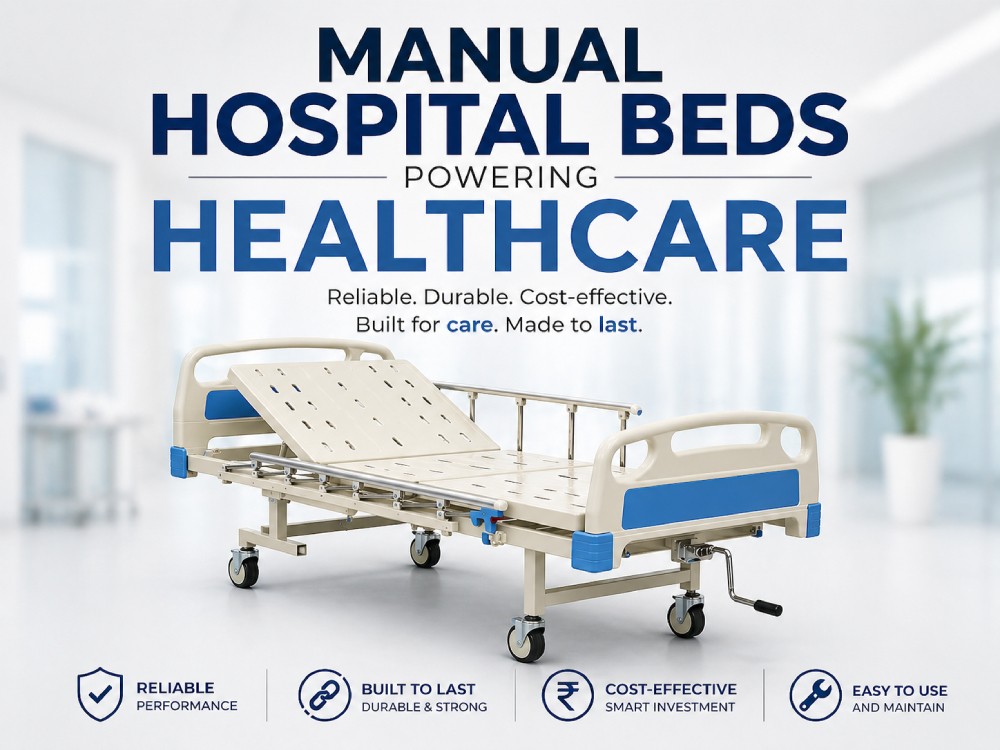
Indian healthcare has evolved significantly over the decades. With advancements in medical technology, electric hospital beds are increasingly entering the market, and many ICU units now prefer motorized beds with advanced features. However, manual hospital beds have maintained a strong presence despite this modernization.
Both hospitals and homecare settings continue to show consistent demand for manual beds. Let’s explore the key reasons behind this:
1. Pricing
Cost plays a major role in decision-making. Manual hospital beds are significantly more affordable compared to motorized ones.
A standard manual bed typically costs between ?13,000 to ?18,000, whereas a similar motorized bed may range from ?20,000 to ?30,000.
This price advantage makes manual beds an attractive option, especially for:
- Budget-conscious hospitals
- Small healthcare facilities
- Homecare users
They deliver essential functionality at nearly half the cost, making them highly practical.
2. Lower Maintenance
Manual hospital beds require minimal maintenance compared to electric beds.
Motorized beds include components like motors and wiring, which are subject to wear and tear and may require repair or replacement over time—adding to maintenance costs.
In contrast:
- Manual beds have fewer mechanical parts
- Repairs (like crank replacement) are simple and inexpensive
- No specialized technician is usually required
This makes manual beds more reliable and cost-effective over the long term.
3. Minimal Technical Requirements
Manual beds do not rely on electrical systems, motors, or complex controls.
As a result:
- They are easier to operate
- Maintenance is straightforward
- No technical expertise is needed for basic handling or repairs
This simplicity is particularly valuable in smaller facilities or rural areas.
4. Ease of Operation
Operating a manual bed using a crank mechanism is simple and dependable.
In homecare scenarios, especially:
- Caregivers often prefer straightforward systems
- Elderly users may find manual operation more predictable
However, for advanced positioning like Trendelenburg and reverse Trendelenburg, manual beds can be slightly more challenging.
Motorized beds become preferable when:
- Caregivers have physical limitations (e.g., back pain)
- Patients need independent control through remote operation
5. Power Independence
One of the biggest advantages of manual beds is that they do not require electricity.
This makes them ideal for:
- Areas with frequent power outages
- Rural or remote locations with limited electricity access
Even though electric beds may offer battery backup, dependence on power remains a concern.
For example, in regions without reliable electricity, a manual 5-function hospital bed becomes the most practical choice.
6. Staff Training
Motorized beds require staff training for proper operation and handling, which adds:
- Time investment
- Training costs
Manual beds, on the other hand, require little to no training, making them easier to adopt across all types of healthcare setups.
Conclusion
While semi-electric and fully electric hospital beds are gaining popularity due to enhanced comfort and convenience, manual hospital beds continue to play a vital role in Indian healthcare.
Factors like:
- Affordability
- Low maintenance
- Ease of use
- Power independence
ensure that manual beds remain relevant and widely used.
As healthcare continues to modernize, electric beds may see increased adoption, but manual hospital beds will likely remain a dependable and practical solution for many years to come.

Fowler Bed with Mattress: A Complete Buying Guide for Hospitals and Home Care
Manual Hospital Beds in India: Why They Still Dominate Healthcare Manual Hospital Beds ...

General
Why do hospital beds have side rails and why are hospital bed side rails removable?
Manual Hospital Beds in India: Why They Still Dominate Healthcare Manual Hospital Beds ...

General
What makes Single function Semi-automatic Motorized bed stand out in the Market?
Manual Hospital Beds in India: Why They Still Dominate Healthcare Manual Hospital Beds ...

General
Hospital Beds with Wheels — Why Castors Matter More Than You Think
Manual Hospital Beds in India: Why They Still Dominate Healthcare Manual Hospital Beds ...

General
Hospital Furniture Color Selection: Why is it Important?
Manual Hospital Beds in India: Why They Still Dominate Healthcare Manual Hospital Beds ...

General
The Importance of Ergonomic Hospital Bed Design
Manual Hospital Beds in India: Why They Still Dominate Healthcare Manual Hospital Beds ...

General
How to Increase Customer Experience in the Healthcare Sector with KRAFT Solutions
Manual Hospital Beds in India: Why They Still Dominate Healthcare Manual Hospital Beds ...

General
Hospital Bed Capacity: Rural Areas vs Urban Areas — Why the Gap Matters and How to Close It
Manual Hospital Beds in India: Why They Still Dominate Healthcare Manual Hospital Beds ...

General
How to Assemble, Set Up, and Maintain Hospital Beds
Manual Hospital Beds in India: Why They Still Dominate Healthcare Manual Hospital Beds ...

General
Why Is It Important to Meet Us at Medicall Expo Every Year ?
Manual Hospital Beds in India: Why They Still Dominate Healthcare Manual Hospital Beds ...

General
FAQ for Hospital Bed
Manual Hospital Beds in India: Why They Still Dominate Healthcare Manual Hospital Beds ...

General
What to Do When a Motorized Hospital Bed Stops Working: A Step-by-Step Guide
Manual Hospital Beds in India: Why They Still Dominate Healthcare Manual Hospital Beds ...

General
What Else Should You Order Apart from a Hospital Bed for a Homecare Patient?
Manual Hospital Beds in India: Why They Still Dominate Healthcare Manual Hospital Beds ...

2 Function Hospital bed – A detailed preview
Manual Hospital Beds in India: Why They Still Dominate Healthcare Manual Hospital Beds ...

KRAFT 144 – The Ideal Single-Function Hospital Bed for Ward & Home Care
Manual Hospital Beds in India: Why They Still Dominate Healthcare Manual Hospital Beds ...

General, General
India Hospital Furniture Market Overview
Manual Hospital Beds in India: Why They Still Dominate Healthcare Manual Hospital Beds ...

General
Complete Guide to Choosing the Right Hospital Furniture for Your Healthcare Facility
Manual Hospital Beds in India: Why They Still Dominate Healthcare Manual Hospital Beds ...

General
Recliner Bed for Patient Care at Home
Manual Hospital Beds in India: Why They Still Dominate Healthcare Manual Hospital Beds ...

The History of Hospitals: From Ancient Healing Places to Modern Medical Institutions
Manual Hospital Beds in India: Why They Still Dominate Healthcare Manual Hospital Beds ...

General
Common Issues in Hospital Beds and How to Fix Them
Manual Hospital Beds in India: Why They Still Dominate Healthcare Manual Hospital Beds ...
General
Hospital Food Table / Tray / Trolley for Patients
Manual Hospital Beds in India: Why They Still Dominate Healthcare Manual Hospital Beds ...

General
Rent or Buy a Hospital Bed – Which is Better?
Manual Hospital Beds in India: Why They Still Dominate Healthcare Manual Hospital Beds ...

General
Adjustable Medical Beds for Elderly and Bedridden Patients at Home
Manual Hospital Beds in India: Why They Still Dominate Healthcare Manual Hospital Beds ...

General
Hospital Bed Mattresses in Chennai – A Buyer’s Guide by KRAFT Supplier, Tamil Nadu
Manual Hospital Beds in India: Why They Still Dominate Healthcare Manual Hospital Beds ...

General
Advantages of Hospital Beds in Home
Manual Hospital Beds in India: Why They Still Dominate Healthcare Manual Hospital Beds ...

General
Hospital Bed Price in India: A Complete Guide
Manual Hospital Beds in India: Why They Still Dominate Healthcare Manual Hospital Beds ...

General
Why ‘Where Can I Buy a Hospital Bed Near Me?’ Is No Longer Important
Manual Hospital Beds in India: Why They Still Dominate Healthcare Manual Hospital Beds ...

General
CSR in Action: 1 Bed for 1000 People – Bridging India’s Critical Healthcare Infrastructure Gap
Manual Hospital Beds in India: Why They Still Dominate Healthcare Manual Hospital Beds ...

General
Discover the Benefits of Vertical and Horizontal Autoclave Hospital Machines with Us – Trusted Manufacturers in Chennai
Manual Hospital Beds in India: Why They Still Dominate Healthcare Manual Hospital Beds ...

General
Revolutionizing Patient Recovery: ICU Beds with Built-in Weighing Scales
Manual Hospital Beds in India: Why They Still Dominate Healthcare Manual Hospital Beds ...

General
Artificial Intelligence in Medicine: The Future of Healthcare is Here
Manual Hospital Beds in India: Why They Still Dominate Healthcare Manual Hospital Beds ...

General
The Vital Importance of Emergency Crash Carts in Hospitals
Manual Hospital Beds in India: Why They Still Dominate Healthcare Manual Hospital Beds ...

General
How to Prevent Bed Sores in Bedridden Patients- Methods & Care Product
Manual Hospital Beds in India: Why They Still Dominate Healthcare Manual Hospital Beds ...

General
GBS Outbreak in Recent News: What You Need to Know
Manual Hospital Beds in India: Why They Still Dominate Healthcare Manual Hospital Beds ...

General
The health benefits of chocolate
Manual Hospital Beds in India: Why They Still Dominate Healthcare Manual Hospital Beds ...

General
How to stay safe and also free from anxiety in times of Corona Virus
Manual Hospital Beds in India: Why They Still Dominate Healthcare Manual Hospital Beds ...

Weight gain during pregnancy - What to expect when you’re expecting
Manual Hospital Beds in India: Why They Still Dominate Healthcare Manual Hospital Beds ...

General
What Is Antenatal Yoga? How Can You Pick A Good Antenatal Class?
Manual Hospital Beds in India: Why They Still Dominate Healthcare Manual Hospital Beds ...

India - A Fast Growing Medical Touring Hub
Manual Hospital Beds in India: Why They Still Dominate Healthcare Manual Hospital Beds ...

General
Getting pregnant with a low sperm count - it is possible!
Manual Hospital Beds in India: Why They Still Dominate Healthcare Manual Hospital Beds ...

General
3 Incredible Ways Virtual Reality Is Changing The Medical Industry
Manual Hospital Beds in India: Why They Still Dominate Healthcare Manual Hospital Beds ...

General
Getting Pregnant with Irregular Cycles - Is it Possible?
Manual Hospital Beds in India: Why They Still Dominate Healthcare Manual Hospital Beds ...

General
The Rise of Wearable Tracking Devices
Manual Hospital Beds in India: Why They Still Dominate Healthcare Manual Hospital Beds ...

General
The Health Risks of Late Pregnancies
Manual Hospital Beds in India: Why They Still Dominate Healthcare Manual Hospital Beds ...

General
Telehealth - A Stepping Stone to a Better Future
Manual Hospital Beds in India: Why They Still Dominate Healthcare Manual Hospital Beds ...

General
Technology Advancements are Transforming the Entire Healthcare Industry
Manual Hospital Beds in India: Why They Still Dominate Healthcare Manual Hospital Beds ...

General
Skip Dinner. Lose Weight.
Manual Hospital Beds in India: Why They Still Dominate Healthcare Manual Hospital Beds ...

General
Optogenetics- Understanding the Human Brain
Manual Hospital Beds in India: Why They Still Dominate Healthcare Manual Hospital Beds ...

General
Online Information through EHR and EMR
Manual Hospital Beds in India: Why They Still Dominate Healthcare Manual Hospital Beds ...

General
Mobile Health App Adoption
Manual Hospital Beds in India: Why They Still Dominate Healthcare Manual Hospital Beds ...