Can I claim insurance for a hospital bed purchased for home use?
Can I claim insurance for a hospital bed purchased for home use?
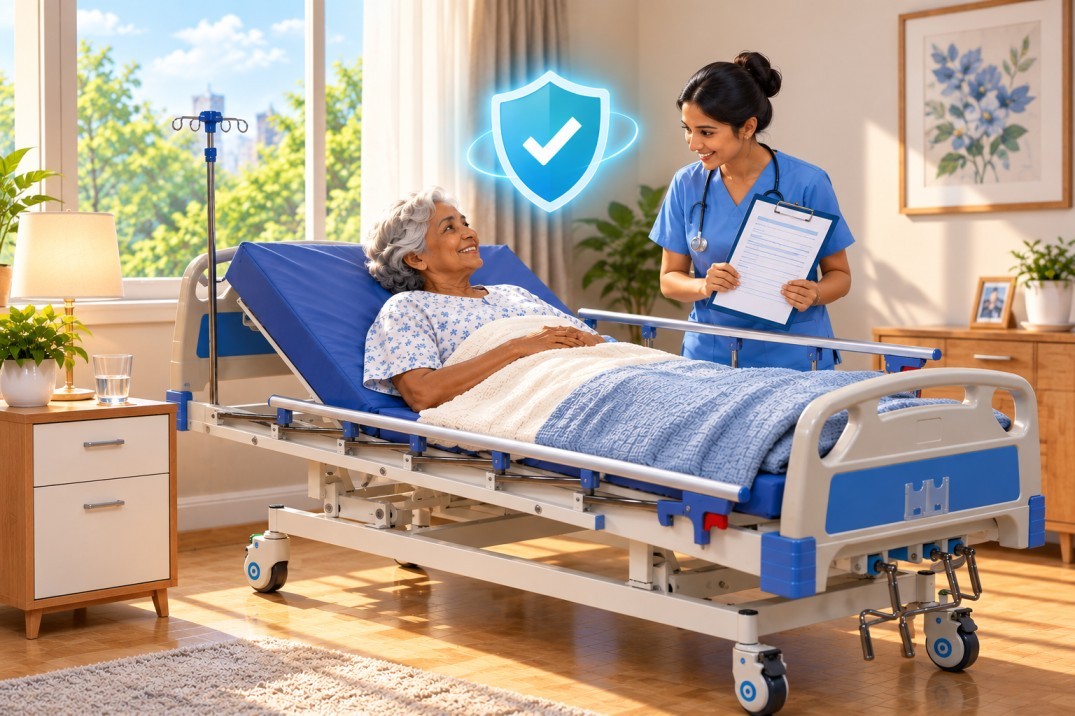
Every health insurance policy is different, and coverage depends on the insurer, the plan, and the policy terms. In India, most standard health policies do not cover the purchase of home-use equipment such as hospital beds, wheelchairs, or walkers. A few insurers offer limited cover through add-ons or special plans. Please read your policy wording and confirm with your insurer before buying.
Health insurance protects you from the financial burden of medical treatment. A policy usually covers expenses during hospitalization, such as room rent, doctor fees, medicines, and surgery costs. Some policies also cover a limited period before and after hospitalization (commonly 30 to 60 days before and 60 to 90 days after). After discharge, many patients still need rest and care at home, as advised by the doctor, to recover fully.
This article explains when a hospital bed may be claimed and how to choose the right one. Minor surgeries need little aftercare, but major operations, such as cardiac, spine, or orthopaedic surgery, can require long recovery at home. A hospital bed helps the caregiver provide care more safely and efficiently, and with an electric bed the patient can adjust positions without help and gain independence.
When can a hospital bed be claimed?
A hospital bed is generally claimed in one of two ways:
- Domiciliary hospitalization (treatment at home): Some policies cover treatment at home when the patient’s condition makes it impossible to shift them to a hospital, or when no hospital bed is available. Most policies require the treatment to last more than three consecutive days. This benefit usually covers doctor visits, medicines, and nursing, and it often excludes certain conditions such as asthma, bronchitis, diabetes, arthritis, and hypertension. It does not automatically cover the purchase of equipment, so check whether the bed is included.
- Durable medical equipment (DME) or home-care add-on: Some insurers cover equipment such as hospital beds under an add-on or specific plan. “Durable medical equipment” is more common in international policies, so Indian policies may use different wording.
In both cases, the insurer will usually ask for a prescription or certificate from the treating doctor on the hospital letterhead, with the doctor’s registration number. It should state the patient’s condition and explain why the bed is medically necessary and not just a convenience.
If a condition severely limits the patient’s mobility, a hospital bed at home may be considered a medical necessity. The insurer still makes the final decision based on the policy terms.
Which hospital bed suits which condition?
Hospital beds are classified by the number of adjustable functions:
- One function (backrest only): Raises the head end. Suitable for short-term recovery from injury or minor surgery. Raising the back with pillows on a normal bed does not give stable, correct support.
- Two function (backrest and knee rest): Add knee lift, which reduces the patient’s tendency to slide down the bed and improves comfort.
- Three function (backrest, knee rest, and height adjustment): Better for long-term care. Height adjustment makes nursing tasks easier for the caregiver and transfers (getting in and out of the bed) easier for the patient.
- Five function (adds Trendelenburg and reverse Trendelenburg tilt): Used for specific medical conditions, usually on a doctor’s advice.
Manual, semi-electric, or electric?
- Manual (crank-operated): Economical and good when a caregiver is always present.
- Electric: Lets the patient adjust positions with a hand control, which supports independence. Choose one with a manual backup (manual override) if power cuts are common.
- Patients with heart or breathing problems often need the head end raised (Fowler’s or semi-Fowler’s position), so discuss the choice with the doctor.
Other things to check when buying:
- The bed should meet the safety standard IEC 60601-2-52 (medical beds) if it is electric.
- Look for a manufacturer with a quality certification such as ISO 13485 and a valid warranty.
- Check the weight capacity, side rails, mattress type, and whether castors have a locking system.
- Consider an overbed table (food table), an IV pole, and a pressure-relief mattress for long-term patients. Note that these accessories may not be covered.
What is required to claim?
- Doctor’s prescription and medical necessity: A written statement from the treating doctor explaining why the bed is needed.
- Prior authorization: Approval from the insurer before the purchase, if the policy requires it. Without this, the claim may be rejected.
- Approved suppliers: Some insurers allow purchases only from their network or approved suppliers.
- Policy type: Check whether your policy includes domiciliary hospitalization or a home-care/DME add-on, and whether there are sub-limits.
- Documents for reimbursement:
- Doctor’s letter stating medical necessity
- Original GST invoice and payment proof for the bed
- Medical reports and discharge summary supporting the need
- Copy of the policy and claim form, with ID proof
Submit the claim within the time limit in your policy, usually within 15 to 30 days of the event.
Please check before you buy. Every insurance provider and every policy is different, and some policies have limits or exclusions on home-use equipment. Talk to your insurance agent and read your policy documents carefully before making any purchase. This article is only meant to help you understand the basics, so always confirm the details with your insurer.

Fowler Bed with Mattress: A Complete Buying Guide for Hospitals and Home Care
Can I claim insurance for a hospital bed purchased for home use? Every health ...

General
Why do hospital beds have side rails and why are hospital bed side rails removable?
Can I claim insurance for a hospital bed purchased for home use? Every health ...

General
What makes Single function Semi-automatic Motorized bed stand out in the Market?
Can I claim insurance for a hospital bed purchased for home use? Every health ...

General
Hospital Beds with Wheels — Why Castors Matter More Than You Think
Can I claim insurance for a hospital bed purchased for home use? Every health ...

General
Hospital Furniture Color Selection: Why is it Important?
Can I claim insurance for a hospital bed purchased for home use? Every health ...

General
Manual Hospital Beds in India: Why They Still Dominate Healthcare
Can I claim insurance for a hospital bed purchased for home use? Every health ...

General
The Importance of Ergonomic Hospital Bed Design
Can I claim insurance for a hospital bed purchased for home use? Every health ...

General
How to Increase Customer Experience in the Healthcare Sector with KRAFT Solutions
Can I claim insurance for a hospital bed purchased for home use? Every health ...

General
Hospital Bed Capacity: Rural Areas vs Urban Areas — Why the Gap Matters and How to Close It
Can I claim insurance for a hospital bed purchased for home use? Every health ...

General
How to Assemble, Set Up, and Maintain Hospital Beds
Can I claim insurance for a hospital bed purchased for home use? Every health ...

General
Why Is It Important to Meet Us at Medicall Expo Every Year ?
Can I claim insurance for a hospital bed purchased for home use? Every health ...

General
FAQ for Hospital Bed
Can I claim insurance for a hospital bed purchased for home use? Every health ...

General
What to Do When a Motorized Hospital Bed Stops Working: A Step-by-Step Guide
Can I claim insurance for a hospital bed purchased for home use? Every health ...

General
What Else Should You Order Apart from a Hospital Bed for a Homecare Patient?
Can I claim insurance for a hospital bed purchased for home use? Every health ...

2 Function Hospital bed – A detailed preview
Can I claim insurance for a hospital bed purchased for home use? Every health ...

KRAFT 144 – The Ideal Single-Function Hospital Bed for Ward & Home Care
Can I claim insurance for a hospital bed purchased for home use? Every health ...

General, General
India Hospital Furniture Market Overview
Can I claim insurance for a hospital bed purchased for home use? Every health ...

General
Complete Guide to Choosing the Right Hospital Furniture for Your Healthcare Facility
Can I claim insurance for a hospital bed purchased for home use? Every health ...

General
Recliner Bed for Patient Care at Home
Can I claim insurance for a hospital bed purchased for home use? Every health ...

The History of Hospitals: From Ancient Healing Places to Modern Medical Institutions
Can I claim insurance for a hospital bed purchased for home use? Every health ...

General
Common Issues in Hospital Beds and How to Fix Them
Can I claim insurance for a hospital bed purchased for home use? Every health ...
General
Hospital Food Table / Tray / Trolley for Patients
Can I claim insurance for a hospital bed purchased for home use? Every health ...

General
Rent or Buy a Hospital Bed – Which is Better?
Can I claim insurance for a hospital bed purchased for home use? Every health ...

General
Adjustable Medical Beds for Elderly and Bedridden Patients at Home
Can I claim insurance for a hospital bed purchased for home use? Every health ...

General
Hospital Bed Mattresses in Chennai – A Buyer’s Guide by KRAFT Supplier, Tamil Nadu
Can I claim insurance for a hospital bed purchased for home use? Every health ...

General
Advantages of Hospital Beds in Home
Can I claim insurance for a hospital bed purchased for home use? Every health ...

General
Hospital Bed Price in India: A Complete Guide
Can I claim insurance for a hospital bed purchased for home use? Every health ...
General
Why ‘Where Can I Buy a Hospital Bed Near Me?’ Is No Longer Important
Can I claim insurance for a hospital bed purchased for home use? Every health ...

General
CSR in Action: 1 Bed for 1000 People – Bridging India’s Critical Healthcare Infrastructure Gap
Can I claim insurance for a hospital bed purchased for home use? Every health ...

General
Discover the Benefits of Vertical and Horizontal Autoclave Hospital Machines with Us – Trusted Manufacturers in Chennai
Can I claim insurance for a hospital bed purchased for home use? Every health ...

General
Revolutionizing Patient Recovery: ICU Beds with Built-in Weighing Scales
Can I claim insurance for a hospital bed purchased for home use? Every health ...

General
Artificial Intelligence in Medicine: The Future of Healthcare is Here
Can I claim insurance for a hospital bed purchased for home use? Every health ...

General
The Vital Importance of Emergency Crash Carts in Hospitals
Can I claim insurance for a hospital bed purchased for home use? Every health ...

General
How to Prevent Bed Sores in Bedridden Patients- Methods & Care Product
Can I claim insurance for a hospital bed purchased for home use? Every health ...

General
GBS Outbreak in Recent News: What You Need to Know
Can I claim insurance for a hospital bed purchased for home use? Every health ...

General
The health benefits of chocolate
Can I claim insurance for a hospital bed purchased for home use? Every health ...

General
How to stay safe and also free from anxiety in times of Corona Virus
Can I claim insurance for a hospital bed purchased for home use? Every health ...

Weight gain during pregnancy - What to expect when you’re expecting
Can I claim insurance for a hospital bed purchased for home use? Every health ...

General
What Is Antenatal Yoga? How Can You Pick A Good Antenatal Class?
Can I claim insurance for a hospital bed purchased for home use? Every health ...

India - A Fast Growing Medical Touring Hub
Can I claim insurance for a hospital bed purchased for home use? Every health ...

General
Getting pregnant with a low sperm count - it is possible!
Can I claim insurance for a hospital bed purchased for home use? Every health ...

General
3 Incredible Ways Virtual Reality Is Changing The Medical Industry
Can I claim insurance for a hospital bed purchased for home use? Every health ...

General
Getting Pregnant with Irregular Cycles - Is it Possible?
Can I claim insurance for a hospital bed purchased for home use? Every health ...

General
The Rise of Wearable Tracking Devices
Can I claim insurance for a hospital bed purchased for home use? Every health ...

General
The Health Risks of Late Pregnancies
Can I claim insurance for a hospital bed purchased for home use? Every health ...

General
Telehealth - A Stepping Stone to a Better Future
Can I claim insurance for a hospital bed purchased for home use? Every health ...

General
Technology Advancements are Transforming the Entire Healthcare Industry
Can I claim insurance for a hospital bed purchased for home use? Every health ...

General
Skip Dinner. Lose Weight.
Can I claim insurance for a hospital bed purchased for home use? Every health ...

General
Optogenetics- Understanding the Human Brain
Can I claim insurance for a hospital bed purchased for home use? Every health ...

General
Online Information through EHR and EMR
Can I claim insurance for a hospital bed purchased for home use? Every health ...

General
Mobile Health App Adoption
Can I claim insurance for a hospital bed purchased for home use? Every health ...